
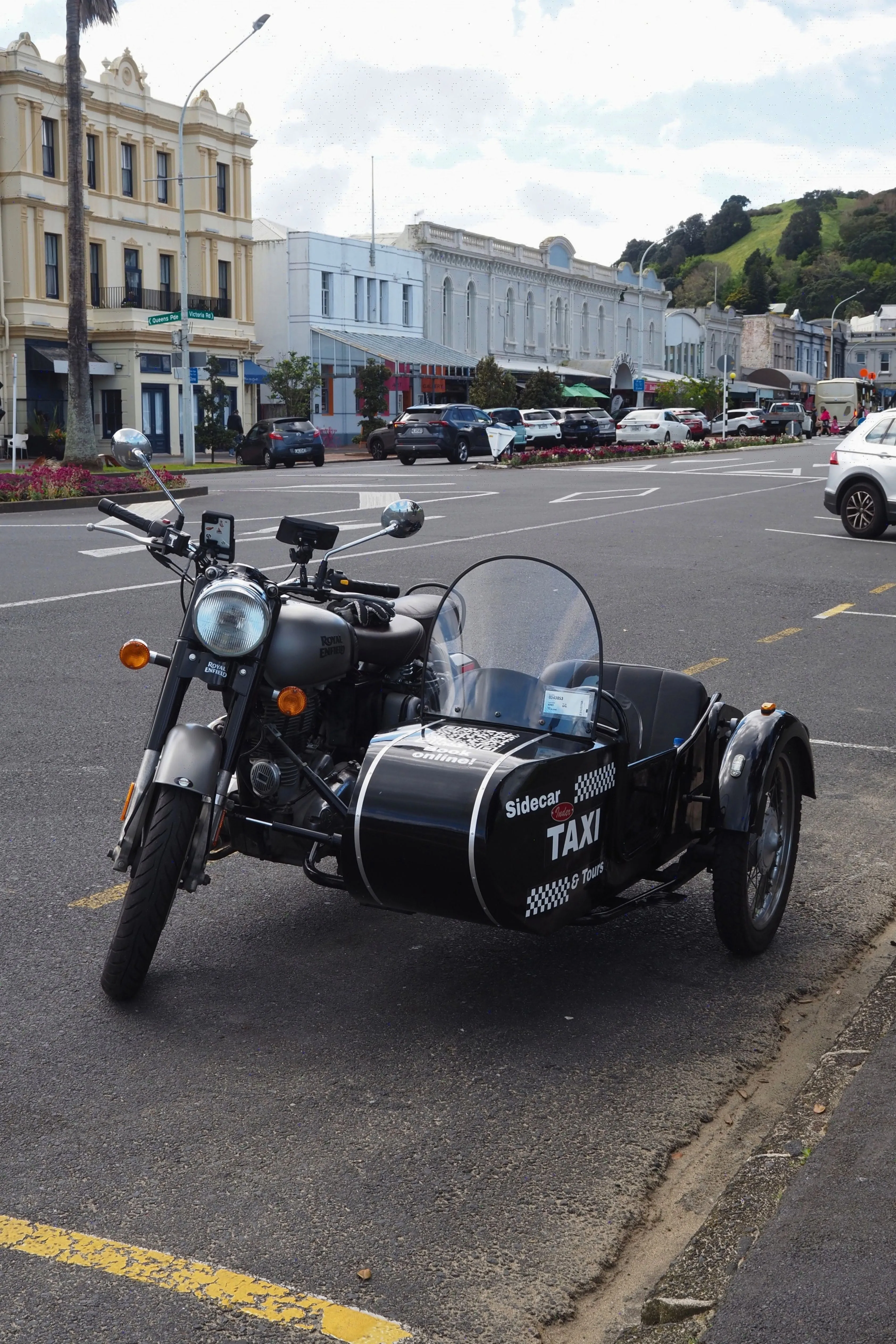
We are always so proud to be the ONLY motorcycle rental service provider in New Zealand that offers a Sidecar Bike for hire! 👌😸
The bike is a professionally set up & tuned Royal Enfield Classic 500, tugging a classic Inder sidecar. The bike has been LVV certified and is fully compliant for hire or tour purposes. ✅
The guide below is aimed at first time sidecar riders: our dear guests who are thinking about renting the sidecar bike from us. We’ll primarily focus on the safe handling and what to expect when you rent from us - stunt moves and advanced sidecar riding techniques(that aren’t safety related) are not included or advised! 🤕👨🦽
The guide is more like a living document that we are slowly developing over time - we’ll update it from time to time when things come to mind. 📃🖋
Absolutely NO AI is used in the writing of this article! #NoAI 🚫🤖
TLDR:
- Slow. It. Down.
- DO NOT put your feet down - boots stay on pegs at all times!
- Go Slow on left turns
- Go REALLY slow on downhill left turns
- Double the time estimate from your maps app
- Long distance riding - take turns if both you and the passenger can ride.
- Much more shoulder & arms strain - especially left shoulder
- Having the passenger sitting in the sidecar makes it safer
- Just. Go. Slow - nothing bad happens if you ride slower
Q&A:
Q: What license do you need to drive a motorcycle with a sidecar in New Zealand?
A: You'll need a Motorcycle License to ride a bike fitted with a sidecar on the road in New Zealand. There aren't any special laws or restrictions imposed upon sidecars in regards to licensing, carrying a passenger in a sidecar poses the same requirement as carrying a passenger on a normal solo bike with pillion seats - Helmets and Full Motorcycle Class license.
Q: Can a Learner or Restricted License holder rent your sidecar bike?
A: YES! Absolutely! The Royal Enfield is powered by a 500 cc engine and is LAMS compliant. Since there are no special rules regarding motorcycles fitted with sidecars, the standard licensing rules apply - we have a letter from NZTA that affirms this.
However, you can not carry a passenger with you if you don’t have a Full License.
Q: Is it more difficult to ride a motorcycle with a sidecar, than a standard solo bike?
A: The answer is a big “depends” - driving a sidecar rig is nothing like riding a standard motorcycle with two wheels, the only similarity remains are the clutch & throttle & brake controls.
When you ride a sidecar bike for the first time, it will probably feel extremely alien to you, with every input(... and the lack of input) producing effects that surprises you - with some practice and a few hours of riding time, things will feel more and more predictable.
Where sidecars are more difficult to operate:
- Muscle strains: Piloting a sidecar requires a decent amount of manhandling with the handlebars, your arm and shoulder will take on a lot of strains over sustained riding. Compared to a solo bike, where almost no strength is required to go straight ahead or turning; on a sidecar rig, you need to use a small but sustained amount of push on one side of the handlebar, to stop the sidecar from veering to the side of the chair, aka “tracking straight”.
- The limit comes sooner than before: As a first time sidecar rider, you need to tackle left turns with extreme caution - the sidecar has the tendency to want to flip up when you have too much speed OR acceleration when turning into it. How much is too much, you might ask? Not a lot, especially when you are riding without a passenger - it’s even possible to lift up the chair from a dead-stop if you give it too much acceleration on start. Having a passenger sitting in the chair helps(greatly) to keep the sidecar wheel on the ground, however, you should always proceed left turns with caution on the back of your mind. Remember, Just. Slow. Down, unlike a solo bike, nothing bad happens to a sidecar rig if you simply go slower.
- Down-hill left turns are the greatest enemy for sidecar pilots: the only way to go about these is to slow down before you enter the turn, if you enter the turn too fast, there’s little you can do to save it.
- Reduced braking effect: The added weight of the sidecar makes braking efforts much less than you’d normally expect from a motorcycle. Plan your speeds, on a downhill, instead of pulling your clutch in and rely on the brakes exclusively - downshift into a lower gear before you go down the hill to give yourself better engine brake effect. give yourself plenty of following distance on the road, especially on downhills, since you’ve lost one of the two ways motorcyclists can save themselves - swerve or brake, don’t forget that you can’t lane split with a sidecar!
- Reduced Acceleration & Top Speed: As that joke goes, “Royal Enfield Riders, just do the best you can”. Fitting it with a sidecar certainly doesn’t help on the speed front. Our sidecar pusher is a Royal Enfield with a 500cc single cylinder engine - it’s hard to compare the characteristics of this engine with any other bikes we’ve ever ridden, think of it more like a tractor engine than a high revving bike engine.
- You’ll often find that you will be going full throttle to start off on a green light just so you don’t annoy the car behind you; and that on any uphill roads, you’d be maxing out and still fall behind the speed limit. Therefore, plan your speeds also applies here: Are you seeing a hill in front of you? Downshift early to give yourself an edge and build up the momentum!
- On the highway, remember to keep on the lefthand lane as much as possible, and leave the rightside(inside) lanes open to the boring car drivers who can actually do the speed limit.
- On rural country roads, use the holding spots to let the cars pass from behind! This isn’t just about politeness, this is to make your ride safer and more enjoyable by releasing the psychological stress from being pushed to go faster.
- Expect spending 2x the time of what your Maps App tells you to get there.